
Fayette Historic Town Site is a preserved 19th century industrial community. From 1867-1891 Fayette produced charcoal pig iron. Fayette sits on Big Bay De Noc on the southwest side of the Garden Peninsula about 17 miles from US-2.
In the mid-1800’s iron ore was shipped from the mines in Michigan’s upper peninsula at a very high cost. To lower the cost, the solution was to build a blast furnace close to the mines. The iron ore was smelted down to pig iron before being shipped to the steel making centers. There were requirements in order to choose a site. The furnaces had to sit close to Escanaba’s ore docks, have a natural harbor and have access to limestone and hardwood. It was these requirements that gave birth to Fayette. Named after Fayette Brown, the Jackson Iron Company agent who chose the site. The town grew up around the two blast furnaces, a dock and many charcoal kilns. At the close of the American Civil War around 500 immigrants moved to Fayette, most coming from Canada, Europe and the British Isles. During its 24 years in operation The Jackson Iron Company produced 225,000 tons of pig iron.
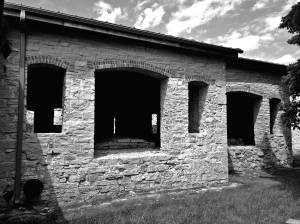
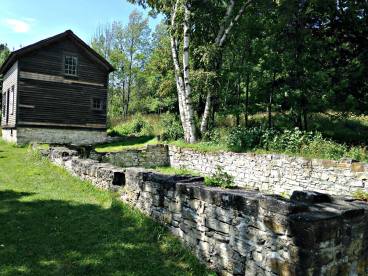
The towns business district was home to a blacksmith, machine shop, carpenters shop along with a company store and office. It was this strip of shops that separated the town into middle and lower class. Those unfortunate to be in the lower class found their home of the south side of town. Their homes were a simple log cabin type house, situated right next to the livestock barn. These houses backed up to “slag beach” the town landfill essentially. All the left over scraps from the furnaces was dumped on the beach. You can still walk the beach and find peaces of slag. The middle class houses can be found along the west side of town. These houses sit nestled in the woods. You can walk along the road and see quite a few still standing. Others are just a stone foundation being slowly hidden by the ground.
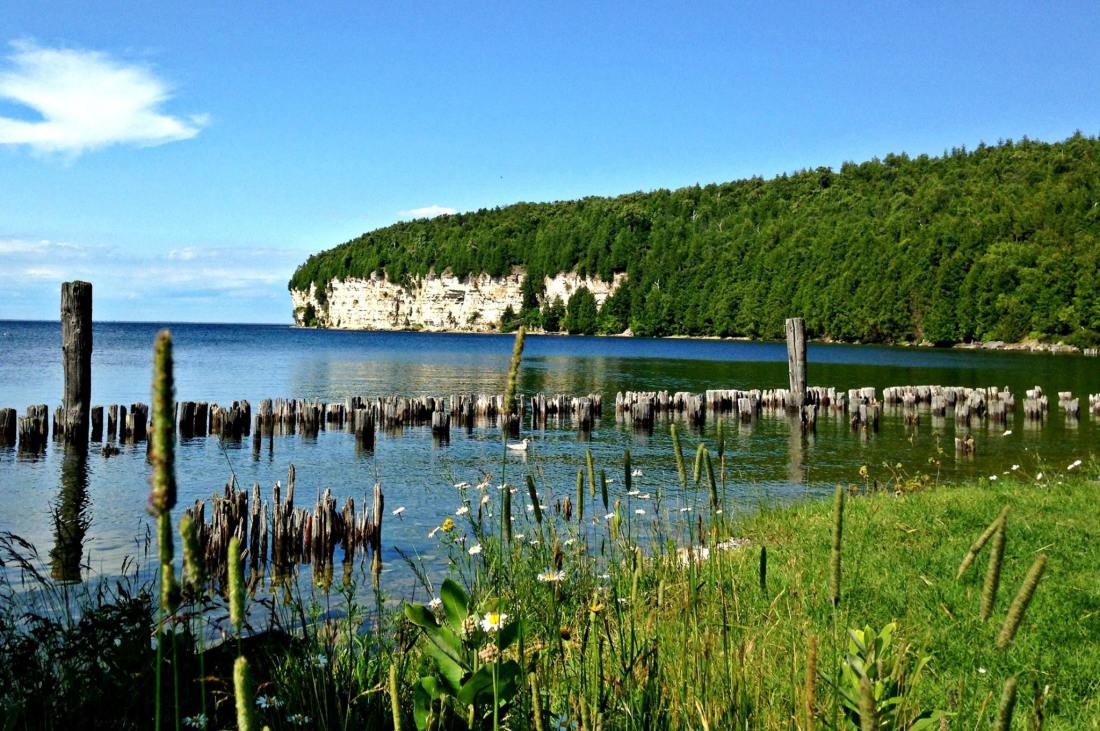
When the charcoal iron market began to declinie, The Jackson Iron Company shut it’s doors on Fayette. Many of the residents stayed and converted the land for farming. in 1916 Fayette was purchased by a wealthy individual and turned into a summer and fishing resort. The towns beautiful hotel became the focal point . Summer vacationers came to Fayette to escape the busy city and to enjoy the view of the towering limestone bluff overlooking the town.
Fayette today is a museum on how life was in the short 24 years of operation. You’ll be able to walk through 20 buildings, stand in the ruins and live history. The buildings that stand have long since faded, a few have been fully restored but most are how they were left. I find Fayette to be overlooked. Yes it’s a bit off the beaten path but I can guarantee you won’t be disappoint. Fayette has something for everyone, a hiking trail that will take you to the top of the limestone bluff. A campground with 61 sites and you can camp on your boat in the old harbor. Walking around, if you’re quiet, you might just hear a ghost.
 Tales of a Michigan Traveler